


> Interviews
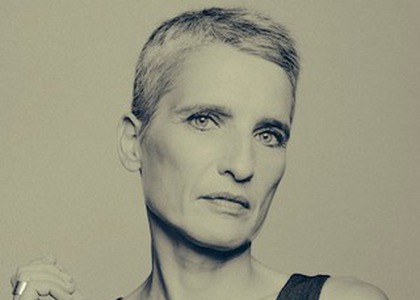
Interview with cellist Anne Gastinel
Cellist Anne Gastinel, winner of the 2006 "Victoire de la Musique" award in the "Soloist of the Year" category and an acclaimed artist across all of the major European stages will the guest of the Radio Chamber Orchestra for the concert programme on Wednesday, December 10th, 2025. The program includes: Concert Walz op. 31 for cello quartet by Wilhelm Fitzenhagen, Serenade op. 22 in E major for string orchestra by Antonin Dvořák, and Concerto op. 129 in A minor for cello and orchestra by Robert Schumann. The renowned French musician spoke with Ioana Țintea for this occasion.
You are returning to the Radio Hall stage to perform alongside the Radio Chamber Orchestra. How did you find your experience with the Romanian audience from last year?
I have fond memories from last year of such lovely and friendly people. So, I am very happy to return here.
You will be performing in the dual role of soloist and conductor of the Radio Chamber Orchestra. How will this double role influence your performance?
I don't want to conduct, because I'm not a conductor. Before our first rehearsal, I told the musicians was that we just need to enjoy the music, to connect with each other, and to feel the music at the same time. And that's enough. I like to exchange ideas with them, discuss our thoughts during certain situations, what we can try, and more. Nobody is conducting during the performance, and that's because they are fantastic and we don't need a conductor. So, I just play alongside them.
What is your artistic principle which guides you whenever you go on stage or perform a new score?
It depends on how I feel. Sometimes, I have to perform the same programme with different musicians, and other times I try completely new pieces if I have more space in my programme. We will have Schumann's Concerto for Cello and Orchestra for the Radio Hall performance, and that is because I simply love it after playing it so many times. On the other hand, I have never performed Dvořák's Serenade in E major for string orchestra, so it will be a first for me. The orchestra knows it after having played it on other occasions, which is why I try to suggest new things and to bring something new to this piece, which the musicians are enthusiastic about. I think it's working very well.
You have a valuable career as a teacher and a jury member for important international cello contests alike. How do you perceive the evolution of the younger generation of cellists and what do you think is most important for an artist in today's music world?
I have been teaching for about 25 years and I love this job. You have to keep open mind, to understand what the students want and their goals, to take into account the version, the style of interpretation, and the human aspect of music. I mean that I love it. I feel that I have learned a lot from these young people, and I have fantastic students at Lyon's Conservatory. Of course, I have listened to many wonderful young cellists during various contests, and I must say that I am very impressed by their skills, it is simply incredible! I really enjoy talking to them in the aftermath of contests, to exchange impressions, and I always stress about not forgetting the composer's message to them. They always come first, and not us, the performers. I always tell all of my students that we are only the author's messengers. We must always be honest when reading the score and not aim to be in the spotlight and prove ourselves. Of course, we always insert a small part of ourselves into the performance, but it must never be too much. For me, the most important thing during a performance is to remain true to the music, meaning to have little narcissism.
How is music scene like in France nowadays? Is the French public interested in classical music?
I think that the initiatives for children have achieved something great in France, as there are quite a few concerts for young people, and so on. I believe that things have changed within the last decade just because there are lots of projects aimed to children, which is necessary because we need to prepare the next generation as a future audience. And I think this is the right way to do it.
What does the essence of classical music mean to you?
I think it is the essence of life, because classical music is an expression of an array human feelings, from happiness to sadness. It's hard to explain, but I don't think it's much different from any other type of music. I'm sure that we don't need to know all of the technical detail, nor need to know how the music is exactly written in order to enjoy it. We just need to listen to it. It's like when you see a painting in a museum: you're not a painter and you don't know much about said painting, but you can still be marvelled by just looking at it. I think it's exactly the same with art as a whole and music, too. You don't have to be a professional or a connoisseur in order to appreciate it. Music is like any other form of art - if you want to be moved by it, then you just got to let yourself be swept away by the experience.
Translated by Andrada-Teodora Ivanov,
University of Bucharest, Faculty of Foreign Languages and Literatures, MTTLC, year I
Corrected by Silvia Petrescu


