



> Interviews
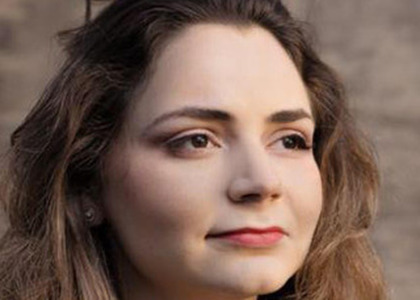
Interview with pianist Daria Tudor, about the FaurEver Together project
The Romanian Music Center Foundation launched FaurEver Together, an interdisciplinary cultural project dedicated to performance, innovation and music education. The project marks the returns of the Fauré Quartet in Romania, on April 1st, 2026 and propose a unique mentoring model designed for reconnect the young musicians in the diaspora with the local cultural realities. With more details, pianistDaria Tudor, the artistic director of the educational project, speaks with Ioana Țintea.
Daria Tudor, first of all, how did the FaurEver Together project come about and what are its main objectives?
The project came about in two stages, my huge desire of bringing back the Fauré Quartet to Bucharest after 17 years, a group of extraordinary musicians who are currently professors at the universities in Germany and people who shaped me, in my student years. The other stage of the project stemmed from the our former experience with educational initiatives at the Hoinar Festival, where we wanted to bring home two things done separately and intended foruniversity and pre-university education.
The project is, as you said, structured on two pillars, Roots, performance and Generations, social impact. How did you plan to implement these elements?
There are two things we consider pretty important in the training of a musician, the respect for the works that had been left to us which we continue to study and which shape us. They shape a way of thinking, a way of being. That's why, as you can see, the Faure Quartet members are these days at the National University of Music, where they are working on the solo instruments with the students. Then there is the role of the music in society, the impact it can have and does have as long as we are making it known to the society. So, we've gathered the young students from Bucharest schools into ensembles, mixed ensembles with Romanian students and graduates from the foreign universities with whom they are currently rehearsing intensively.
For the young ones, the concert audience looks a certain way, but we try to introduce them to people who usually don't attend and don't have the possibility to attend concerts very often and I want to see spontaneous reactions, a different concert atmosphere, but most importantly for me, I want to see the kind of impact and reactions they can elicit from the listeners, in relation to the music they're performing on the stage.
Tell us about the FaurEver Generations, the program focused on the pre-university education through which you return in the country with four different musicians who teach students at "Dinu Lipatti" National College of Arts and "Iosif Sava" Middle School of Arts in Bucharest on their journey into chamber music. How was the working process between thementors and students designed duringthe five days?
The mentors are Florian Mitrea on piano, Sofia Blându on cello, Alexandru Spânu on viola, Elisa Nedelciu on violin and myself on piano. We've shared experiences with the Generations teachers and that's when we decided to put together a diverse program for these concerts. This was one of our main goals, both in terms of the type of ensemble and the music, so that the concert's dynamic would unfold naturally and we could work, first of all, on the technical and musical aspects with the young ones, to lay the foundation for ensemble playing in a relatively short time and help them convey what they need to convey on stage, perhaps even by comparing their performances with those of their peers. To have time to bring them together so they can realize what a beautiful story these two concerts will create, at Ploiești at the Nației Theater, on the 2nd and 3rd of April, at 4 P.M.
What's the most valuable thing a young musician can learn from a mentor, besides the technique?
The joy of making music and beyond that I wish to instill in them a sense of responsibility because chamber music fosters responsibility, creates a micro-community that establishes its owns rules where no one can be more powerful or less important than their peer and this creates some principles of thinking that will be valuable for the rest of their live. Even though, right now, they don't realize it, we are trying to convey it to them, to leave them with this foundation which will shape them as people of integrity, regardless of whether or not they choose to pursue a career in music.
Translated by Cosmin Marinel Șerban,
University of Bucharest, Faculty of Foreign Languages and Literatures, MTTLC, year I
Corrected by Silvia Petrescu


